
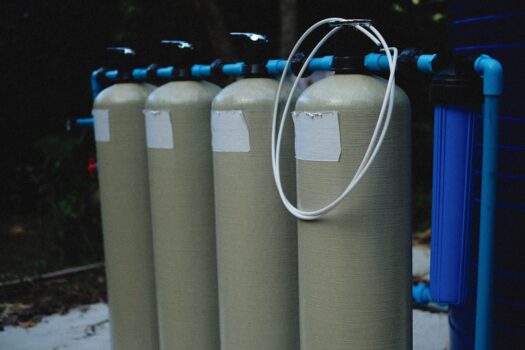
Whole House Water Filtration Explained for Homeowners
Making informed choices about your home’s water starts with understanding the difference between drinking-quality and whole-house filtration. A whole-house system treats water at the point it enters your home, improving water used for showers, laundry, dishwashing, and plumbing fixtures—reducing scale, sediment, and taste issues across every tap.
This guide breaks down how whole-house filtration works, what contaminants different stages address, how to choose the right system, and practical maintenance steps so you get clean water without surprises.
What is a whole-house water filtration system?
A whole-house (point-of-entry) system sits on the main water line and treats all incoming water before it reaches fixtures. These systems range from single-stage sediment housings to multi-stage systems that combine sediment, carbon, and specialty media. If you’re evaluating options, examples like the iSpring whole-house filter illustrate common multi-stage setups for sediment, chlorine, and iron reduction.
How whole-house systems work (flow, stages, and placement)
At its simplest, water flows into the house and passes through one or more filter housings. A typical layout places a sediment pre-filter first to capture sand, silt, and rust. The wide range of replacement options—such as sediment replacement cartridges—are designed to protect downstream media and prolong system life.
Common filter types and what they remove
Understanding media types helps you match treatment to specific problems:
- Mechanical/sediment filters (5–50 micron) remove particulates and protect other stages.
- Activated carbon reduces chlorine, volatile organic compounds (VOCs), and improves taste and odor. Look for certified carbon filter cartridges when chlorine or taste is the concern.
- Iron and manganese filters use catalytic or oxidation media; some systems include water softening or sequestration stages.
- Specialty media address nitrate, arsenic, or PFAS—these are selected after testing confirms the issue.
Showers, scale, and targeted point-of-use options
Whole-house systems improve shower water by reducing chlorine and sediment, but some homeowners also install dedicated shower treatments for skin and hair benefits. If the shower experience is a priority—or if you rent a fixture—consider adding shower water filters at the fixture for extra chlorine or scale control.
Whole-house vs point-of-use: where reverse osmosis fits
Whole-house systems are ideal for general protection and aesthetic improvements; they are not typically designed to deliver drinking-water-level purity for dissolved contaminants. For drinking water, many homeowners pair whole-house filtration with point-of-use reverse osmosis. Popular point-of-use options include under-sink reverse osmosis systems, which provide high-quality drinking water while the whole-house system handles bulk sediment, chlorine, and scale prevention.
When a reverse osmosis unit is used, it usually requires a storage vessel to supply adequate flow at the kitchen tap—consider an appropriately sized reverse osmosis storage tanks if flow needs are high or multiple users draw simultaneously.
Sizing, flow rate, and water pressure considerations
Choose a whole-house system rated for your peak flow. Typical homes require systems rated between 5 and 15 gallons per minute (GPM) depending on fixture count and simultaneous use. Installing a system with an insufficient GPM will reduce household water pressure and create complaints at showers or appliances.
Measure and monitor pressure before and after installation—using a water pressure gauges helps confirm inlet pressure and detect downstream pressure drop as filters load up. Allow for some pressure loss through filter media when sizing pipe diameter and pump selection.
Installation and maintenance basics
Professional installation is recommended for the main shutoff and system mounting, but many homeowners perform scheduled cartridge changes themselves. Regular maintenance tasks include replacing sediment and carbon cartridges on the manufacturer interval, sanitizing housings during changes, and checking for leaks at fittings. Keep manufacturer-specified spares on hand: common parts include housings, O-rings, and cartridges.
Testing, monitoring, and when to upgrade
Start with a water test to identify what needs removal—chlorine and sediment are treated differently than bacteria or heavy metals. For microbiological concerns, use dedicated bacteria water test kits before relying on filters alone. If test results show contaminants outside the system’s design range, upgrade media or add point-of-use systems like RO or UV.
Quick checklist before you buy
- Get a baseline water test (municipal report or private lab).
- Identify primary problems: sediment, chlorine, iron, hardness, or specific contaminants.
- Select system capacity based on peak GPM and household size.
- Verify compatible replacement media and local availability.
- Plan for pressure monitoring and regular cartridge replacement.
FAQ
Q: Will a whole-house filter remove lead?
A: Not always—removal depends on filter media. Sediment and carbon can reduce particulate lead and some dissolved lead, but test results determine whether certified media or a dedicated point-of-use solution is needed.
Q: How often should I change cartridges?
A: It varies by filter type and water quality. Sediment filters often change every 3–12 months; activated carbon usually every 6–12 months. Follow manufacturer guidance and monitor pressure drop.
Q: Can I use a water softener and whole-house filter together?
A: Yes. Softening (ion exchange) typically follows sediment filtration and may be positioned before or after carbon depending on goals. Coordinate salt use and media protection in system design.
Q: Do whole-house filters disinfect bacteria?
A: Most mechanical and carbon systems do not reliably disinfect. If bacterial contamination is present, consider UV disinfection, chlorination, or certified point-of-use systems. Confirm with test results.
Q: Will filtration reduce my water heater efficiency?
A: Properly sized systems cause modest pressure drop but should not affect water heater efficiency. Reducing sediment and scale can actually protect and extend the life of the heater.
Conclusion — practical takeaway
Choose a whole-house system based on tested contaminants and household flow needs: use sediment pre-filtration to protect media, add carbon for chlorine and taste, and combine with point-of-use reverse osmosis for drinking water if necessary. Monitor pressure with a gauge, keep replacement cartridges on schedule, and test periodically to ensure the system continues to match your water quality goals.
Products Featured in This Article
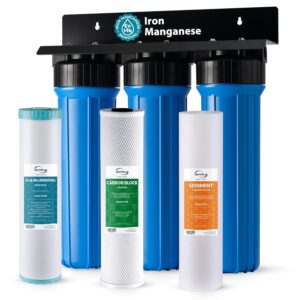
iSpring Whole House Water Filter Sy…
Product description Premium Quality Whole House Water Filter System First Stage PP Sediment Water Filter Multi-layer…
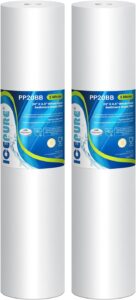
ICEPURE 5 Micron 20″ x 4.5…
Product description 1 SATISFYING WATER 2 SATISFYING MATERIAL More Options for You Add to Cart Add…
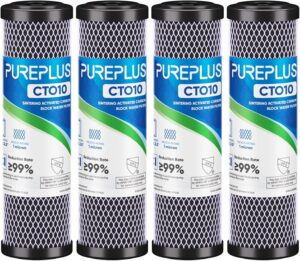
1 Micron 2.5″ x 10″ Who…
Product description 1 Natural and Safe Material 2 Superior Filtration 3 Enhanced Water Quality 1 Easy…