How to Build a Cleaner Water Setup for Your Kitchen
Clean, reliable water in the kitchen is essential for drinking, cooking, and food prep. Building a better setup doesn’t require replacing every pipe — it starts with a clear plan, targeted testing, and choosing the right point-of-use systems for your needs.
This guide walks you step-by-step through assessing your water, choosing filtration points, selecting appropriate technologies, and maintaining filters so your kitchen water is consistently cleaner and better tasting.
1. Start by testing your water
Before buying equipment, test what’s actually in your tap. A broad-panel test gives you a baseline so you can target the right solution. Consider a comprehensive kit that checks for common contaminants, organics, and metals; that will help you decide whether you need carbon filtration, reverse osmosis, or specialized treatment.
Good lab-backed options are available as Drinking Water Test Kits that return actionable results for both city and well systems.
2. Decide where to treat — whole kitchen or point-of-use
There are two practical approaches: treat every incoming line with a whole-house system, or install point-of-use filters where you need the cleanest water (usually the kitchen faucet and refrigerator). For most homeowners, a point-of-use under-sink system plus fridge filter delivers the best balance of cost and performance.
If you choose point-of-use, a dependable option is an Under Sink Water Filters, which provide high-capacity carbon and multi-stage filtration without cluttering the countertop.
3. Choosing an under-sink system: what to look for
When evaluating under-sink systems, look for multi-stage designs that combine sediment removal, activated carbon, and, if necessary, a specialty stage for PFAS or fluoride. Certified reductions (NSF/ANSI) for contaminants you tested for are a major plus. Size, flow rate, and ease of filter replacement matter for day-to-day use.
A modern option that balances layers of media for taste, chlorine, and some heavy metals is the Waterdrop TSA 8 Layer Under Sink Water Filter System, which is designed for direct connection and consistent faucet performance.
4. Countertop and portable solutions for renters or small kitchens
If you rent, lack cabinet space, or want a low-installation alternative, countertop systems and pitcher-style filters are practical. Countertop systems provide stronger filtration than pitchers and are easy to install without plumbing changes.
Explore the range of Countertop Water Filters when you need a compromise between performance and portability.
5. Don’t forget the refrigerator and ice maker
Refrigerator filters and ice maker lines are common sources of taste and odor complaints. Replacing these filters on schedule prevents stale taste and reduces chlorine and particulate carryover into ice and cold water.
Keep a dependable supply of Replacement Refrigerator Filters on hand and follow manufacturer replacement intervals (commonly every 6 months).
6. Maintenance: replacement cartridges, carbon media, and schedules
Filters only work when changed on time. Track gallons used or calendar time, and always use compatible replacement media. Activated carbon is the workhorse for taste and chemical reduction, but it loses capacity and must be replaced.
Stock the right parts by searching Replacement Carbon Filters and replacement cartridges for your chosen system so you can swap filters the moment performance drops.
7. Hard water, scale, and specific issues
If your kitchen fixtures show scale buildup or your coffee maker clogs frequently, test for hardness. Hard water affects taste, reduces appliance efficiency, and shortens filter life. A simple strip or kit tells you whether you need a water softening pre-treatment or targeted scale-control solutions.
Start with a reliable Hard Water Test Kits to measure grains per gallon and decide on softeners, template-assisted crystallization, or periodic descaling.
8. Backup and portable filtration for emergencies
Keep a portable or backup option in case of municipal issues or power outages. Options range from filtered water bottles and gravity systems to compact emergency filters. These are also useful for trips and intermittent needs in the kitchen.
For everyday portability consider bottled filters or a countertop gravity unit; prioritize one that removes particulates and pathogens if you’re unsure about source water during an outage.
Quick checklist: build your kitchen water setup
- Run a full Drinking Water Test Kits panel to identify contaminants.
- Decide on point-of-use vs whole-house based on budget and needs.
- Install an under-sink system for drinking/cooking; consider multi-stage under-sink for broad reduction.
- Replace refrigerator filters on schedule and keep spares (Replacement Refrigerator Filters).
- Stock replacement carbon cartridges (Replacement Carbon Filters).
- Test for hardness and treat if scale is an issue (Hard Water Test Kits).
- Keep a portable/backup option for emergencies or travel.
Conclusion
Building a cleaner kitchen water setup is systematic: test first, target the highest-use points (faucet, fridge), choose appropriate technology, and maintain filters on schedule. With the right combination of testing and correctly matched systems, you’ll get consistently better-tasting, safer water for cooking and drinking.
Practical takeaway: test your water, install a point-of-use under-sink filter, and set a calendar reminder for filter replacements.
FAQ
Q: How often should I test my tap water?
A: Test annually for routine checks, and immediately after any plumbing changes, well repairs, or if you notice taste, color, or odor changes. For targeted risks (like lead in older homes), run a specific test sooner using a Lead Water Test Kits.
Q: Is under-sink filtration better than a pitcher?
A: Under-sink systems usually provide higher flow, larger-capacity media, and multi-stage treatment (sediment + carbon + specialty stages). Pitchers are convenient and low-cost but have limited capacity and contaminant range.
Q: Will a carbon filter remove lead?
A: Some carbon filters can reduce certain forms of lead, but effectiveness varies by product. Look for filters certified for lead reduction or combine carbon with other technologies designed for heavy metals.
Q: How do I know when to replace a filter?
A: Follow the manufacturer’s gallon or time-based recommendation, watch for reduced flow or taste changes, and keep replacement cartridges on hand for timely swaps.
Q: I have a well — what additional steps are important?
A: Wells often need checks for bacteria, iron, sulfur, and sediment. Start with a full drinking-water panel and address specific contaminants with targeted pre-filters, iron or sulfur filters, or disinfection when needed.
Q: Can I install an under-sink system myself?
A: Many under-sink systems are designed for DIY installation, but if you’re uncomfortable with plumbing, hire a plumber. Proper installation prevents leaks and ensures the system functions as intended.
Products Featured in This Article
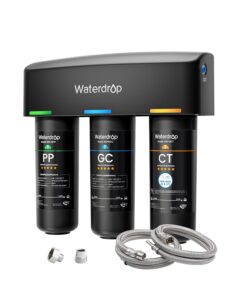
Waterdrop TSA 8 Layer Under Sink Wa…
From the brand Filter Better Live Healthier Innovative Dual Filtered Flows Waterdrop Filter Replacement [Easy DIY…