
UV Water Purification Explained in Simple Terms
UV (ultraviolet) water purification is one of the cleanest, simplest ways to reduce microbiological risks in water. It uses light — not chemicals — to inactivate bacteria, viruses, and protozoa so they can’t reproduce. For homeowners and small businesses, UV is a low-maintenance option that pairs well with other filtration methods.
This guide breaks down how UV works, where it fits in a home system, what it does and doesn’t remove, and practical steps to choose and maintain a UV unit. Expect clear, actionable information you can use to improve your water quality now.
How UV Purification Works
UV purification uses a lamp that emits shortwave ultraviolet light (usually UV-C). When microorganisms pass through the UV chamber, the light damages their DNA or RNA, preventing replication. Without the ability to reproduce, these organisms can’t cause infection even if some cells remain intact.
Key practical points: the water must be clear enough for light to penetrate, flow rate matters (too fast reduces exposure), and lamps have a finite life measured in hours. Unlike filters, UV does not remove particles, metals, or chemicals — it only disinfects.
What UV Destroys — and What It Doesn’t
UV is effective against a broad range of pathogens including coliform bacteria, E. coli, Giardia, and Cryptosporidium when dosed correctly. Because it works by inactivating microorganisms, it does not add anything to the water or change taste.
That said, UV does not remove sediment, dissolved minerals, heavy metals, chlorine, or organic chemicals. For complete water quality assurance, periodic testing is recommended — especially for bacteria. You can use specialized test kits like Bacteria Water Test Kits to confirm microbial status after installation.
Types of UV Systems and Where They Fit
UV systems come in several formats: point-of-use units for a single tap, whole-house systems that treat all incoming water, and countertop or combination units that pair UV with other technologies. For example, some countertop reverse osmosis systems include UV as a final disinfection stage for faucet water — an all-in-one option worth considering if you want both filtration and UV in one device, such as the Aigerri UV Countertop Reverse Osmosis Water Filter.
Choose a point-of-use UV if you only need safe drinking water at the kitchen sink. Choose whole-house UV if you want treated water for showers, laundry, and outdoor uses as well. Keep in mind whole-house systems require larger lamps and more rigorous prefiltration.
Why Pre-filtration Matters
UV needs clear water to be effective. Any suspended solids or turbidity can shield microbes from light. That’s why most UV systems are installed after sediment or particulate filters. For kitchen or localized installations, common prefiltration includes carbon or under-sink mechanical filters and sediment traps.
If you’re installing a point-of-use or under-counter setup, pairing UV with an Under Sink Water Filters makes sense: the filter captures particulates and larger contaminants, leaving UV to handle microorganisms.
For well water supplies, bigger sediment loads are common. A quality prefilter such as Sediment Filters for Well Water protects the UV chamber and keeps the UV dose consistent by reducing turbidity.
Combining UV with Carbon and Other Filters
Carbon filters and other media address issues UV cannot: chlorine taste and odor, volatile organic compounds, and many chemicals. A typical effective sequence is sediment → carbon → UV. Carbon grabs chlorine and organics that could otherwise reduce UV effectiveness indirectly (e.g., by fouling surfaces or changing water chemistry).
If your system uses removable filter media, keep replacements on schedule. For carbon and cartridge changes, look for suitable parts like Replacement Carbon Filters to maintain performance and water quality.
Maintenance, Lifespan, and Common Issues
Maintenance is straightforward but essential: replace the UV lamp on schedule (typically annually), clean or replace prefilters, and inspect quartz sleeves for fouling. A lamp may still glow after it loses effectiveness; rely on hour counters or manufacturer schedules rather than visible light.
Common problems include reduced flow from clogged prefilters, scale buildup on sleeves in hard water areas, and electrical or ballast failures. Use compatible parts and avoid bypassing prefiltration — those shortcuts reduce effectiveness and lead to costly repairs.
Testing and Validating Performance
After installation and periodically afterward, test your water to confirm the system is working as intended. Microbial testing and general drinking water analyses are both useful. For broad water assessments check kits designed for household use like Drinking Water Test Kits, which cover multiple parameters including indicators of microbial or chemical issues.
If you detect contamination or if your system experiences a failure, treat water as unsafe until corrected and retested. Keep replacement lamps and basic spares on hand so you can restore treatment without long downtime.
Portable and Emergency Use
UV can also be used in travel and emergency contexts. There are hand-held UV pens for camping and travel that disinfect small volumes quickly; however, they require relatively clear water and a reliable power source.
For field or crisis situations where filtration and UV might both be needed, consider combining point solutions: lightweight filters or bottles for particulate and protozoa removal, and UV devices for disinfection. If portability is your priority, products in categories such as Emergency Water Filters can supply bulk emergency needs, and for personal hydration a complement like Water Filter Bottles is useful for filtered drinking water on the go.
Checklist: Quick Steps to Add UV to Your Home
- Test existing water to determine turbidity and contaminants.
- Choose point-of-use or whole-house UV based on needs and flow rates.
- Install appropriate prefiltration (sediment and/or carbon) before the UV chamber.
- Factor in lamp replacement and sleeve cleaning in your maintenance plan.
- Keep a backup lamp and basic fittings on hand for quick swaps.
- Verify performance with periodic microbial and drinking water tests.
FAQ
Q: Will UV remove lead or hardness?
A: No. UV only inactivates microorganisms. To remove lead or hardness you need specific filters or softeners.
Q: How often do I replace the UV lamp?
A: Most lamps are rated for about 9,000–12,000 hours (roughly 9–12 months with continuous use). Follow manufacturer guidance and replace on schedule, not just when the lamp dims.
Q: Is UV safe for babies and immune-compromised household members?
A: UV is an effective disinfection method but should be part of a comprehensive approach. Ensure proper installation, prefiltration, and routine testing. If you have concerns about vulnerable individuals, consult a qualified water professional for system design and validation.
Q: How do I know my UV system is working?
A: Regular testing for bacteria and other indicators is the only reliable check. Many systems include flow or lamp indicators; combine those with periodic microbial testing.
Q: Can I use UV on well water?
A: Yes, but well water often requires additional prefiltration (sediment, iron, sulfur treatment) before UV to ensure clarity and consistent UV dose.
Conclusion: Practical Takeaway
UV is a reliable, chemical-free disinfection method when installed with proper prefiltration and maintained on schedule. Use UV as part of a layered approach—filters for particles and chemicals, UV for microbes—and validate performance with regular testing. With the right setup and routine care, UV can give you an efficient and low-chemical way to improve drinking water safety.
Products Featured in This Article
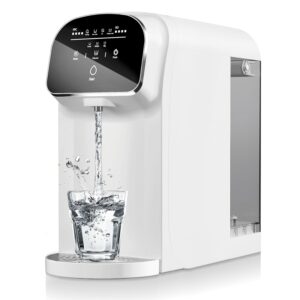
Aigerri UV Countertop Reverse Osmos…
From the brand Purity, Made Simple Founded in 2020, Aigerri was born from a simple belief:…