Choosing the right way to treat your water begins with understanding two often-confused terms: water filtration and water purification. They overlap, but they’re not identical — and the difference matters for what contaminants you can expect to remove, what maintenance you’ll face, and what solution makes sense for tap, well, or emergency water.
This guide explains the practical differences, common technologies, and how to pick the right approach for drinking, cooking, showering, or outdoor use. Read on for clear comparisons, a simple checklist, and an FAQ to help you decide with confidence.
What’s the core difference: filtration vs. purification
Filtration removes particles and some dissolved substances by physical barriers or adsorption (for example, sediment filters and activated carbon). Purification is broader: it includes filtration but adds processes that reliably inactivate or remove microorganisms and dissolved chemicals — such as disinfection, reverse osmosis (RO), and certain chemical treatments.
If you want a point-of-use, lower-cost solution for improved taste and visible clarity, a filter may be enough. If your water source could contain pathogens, heavy metals, or dissolved chemical contaminants at hazardous levels, you need purification. For whole-home or heavy-duty removal, many homeowners install under-counter purification systems; for example, a typical under-sink option is available here: Under Sink Water Filters.
How common filtration methods work
Filtration technologies focus on trapping or adsorbing contaminants:
- Mechanical/sediment filters—remove sand, rust, and large particulates.
- Activated carbon—adsorbs chlorine, taste and odor compounds, and some organic contaminants.
- Ceramic filters—physically block bacteria and particulates down to a certain size.
Activated carbon is one of the most widely used filtration media in household systems. If you’re replacing cartridges or maintaining a carbon-based filter, look for compatible options such as Replacement Carbon Filters.
How purification processes go further
Purification adds steps that reduce microbes and dissolved solids to levels filtration alone often can’t achieve:
- Reverse osmosis (RO) forces water through a semipermeable membrane that removes many dissolved salts, metals, and some chemicals.
- UV disinfection uses ultraviolet light to inactivate bacteria, viruses, and protozoa without chemicals.
- Chlorination or chemical disinfectants inactivate pathogens in municipal and emergency contexts.
An example of an under-counter RO purifier is the multi-stage reverse osmosis system, which shows how purification combines filtration and membrane separation. See a common household model here: Waterdrop G3P600 Reverse Osmosis System.
Which contaminants each method removes
Understanding target contaminants helps match treatment to risk:
- Filtration (sediment, carbon): particles, chlorine, bad tastes/odors, some VOCs and pesticides.
- Purification (RO, UV, chemical): dissolved salts, heavy metals (lead, arsenic in many cases), PFAS (with appropriate membranes), and biologic pathogens.
Lead is a common concern because it’s a dissolved metal that requires specialized testing and often a purification solution. If lead is a worry, test specifically for it using a dedicated kit before choosing a system: Lead Water Test Kits.
When filtration is sufficient — and when you need purification
Use filtration when your water source is municipally treated and you want better taste, odor, or particulate removal. Choose purification if tests show pathogens, heavy metals, or dissolved industrial contaminants, or if you use a private well with variable quality.
Before investing, test your water to identify contaminants and concentrations. Comprehensive home testing helps you avoid over- or under-treating; start with a reliable kit for drinking water analysis: Drinking Water Test Kits.
Point-of-use and portable options
Not every need requires plumbing changes. For on-the-go or emergency use, portable filters and purifiers cover different scenarios:
- Filtered bottles and straw systems are great for hiking and travel to remove particulates and many bacteria: see portable choices like Water Filter Bottles.
- Emergency filters and compact purifiers are designed for short-term use during outages or disaster response; they often combine filtration with disinfection steps: Emergency Water Filters.
Maintenance, cost, and water characteristics to consider
Your water’s hardness, sediment load, and contaminant profile affect cost and maintenance. Hard water reduces filter life and can foul membranes; test for hardness before choosing softening or RO upgrades: Hard Water Test Kits.
Costs to compare:
- Upfront hardware (filter housing, RO system, UV lamp).
- Ongoing consumables (carbon cartridges, RO membranes, UV lamp replacement).
- Installation and potential plumbing modifications.
Small point-of-use filters are inexpensive but need regular cartridge replacement for performance; larger RO or multi-stage purifiers cost more initially but remove a wider range of contaminants. Balance budget with the contaminants you must address.
Checklist: How to pick the right approach
- Test your water for bacteria, lead, hardness, and chemicals.
- If microbes or dissolved heavy metals are present, prioritize purification (RO, UV, or appropriate chemical treatment).
- For taste and chlorine, a carbon filter or pitcher often suffices.
- Consider point-of-use vs whole-house depending on uses (drinking/cooking vs bathing).
- Factor in replacement filter availability and costs before buying.
FAQ
- Q: Can a carbon filter remove bacteria?
A: Standard carbon filters reduce taste and organic chemicals; most do not reliably remove bacteria unless paired with a physical barrier or disinfection step. - Q: Is reverse osmosis the same as purification?
A: RO is a purification method because it removes dissolved solids and many contaminants that simple filtration cannot. - Q: How often should I replace cartridges?
A: It depends on flow and contaminant load; most carbon cartridges need replacing every 3–12 months. Follow manufacturer guidance and monitor taste and flow rate. - Q: Can portable filter bottles make stream water safe?
A: Many certified water filter bottles remove bacteria and protozoa and improve clarity; some remove viruses only when paired with chemical or UV treatment. Check product specs for pathogen removal. - Q: Should I test for lead even if my water looks clear?
A: Yes. Lead is dissolved and colorless; test specifically with a lead kit if your plumbing is older or you have metal piping concerns.
Practical takeaway: test first, then match treatment to the problems you find. If tests show only chlorine or sediment, a carbon filter or under-sink system may be adequate. If tests show pathogens, heavy metals, or dissolved industrial contaminants, choose a purification system (RO, UV, or combined solutions). Start your assessment with clear testing and pick a system that fits the contaminants, budget, and maintenance you can sustain.
Products Featured in This Article
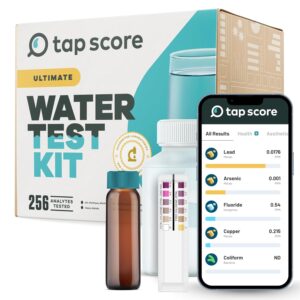
Ultimate Home Water Test Kit for Dr…
Product description Take care of your home’s health – start by easily testing your water Whether…
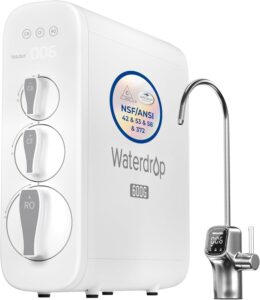
Waterdrop G3P600 Reverse Osmosis Sy…
From the brand Reverse Osmosis Water Filter [Trusted certifications]: Waterdrop G3P600 reverse osmosis system is certified…