Choosing the right water filtration system starts with one simple truth: you can’t pick a filter without knowing what you’re filtering out. Most people guess based on taste or smell, and that’s where everything goes wrong.
Here’s the real game plan: test your water first, identify the specific contaminants, then match a filter system to those exact problems. That’s it. That’s the whole strategy. Let’s walk through how to actually do it.
Step 1: Test Your Water Quality First
Before you spend a dime on a filter, test your water. This is non-negotiable.
If you’re on a municipal water system, you can request a water quality report from your local water department—it’s free and shows what’s in your tap water. If you’re on a well, you’ll need to order a test kit or send a sample to a lab.
You can grab a basic WaterPurityGuide testing kit to check for common contaminants like lead, chlorine, bacteria, and minerals at home. More comprehensive lab tests run $100-300 but catch everything. Worth it if you have kids or health concerns.
The test results tell you exactly what you’re dealing with—whether it’s sediment, hard water, chemicals, bacteria, or heavy metals. This is your roadmap for the rest of the process.
Step 2: Understand NSF Certification Standards
Not all filters are created equal. NSF International is the gold standard for certifying water filters, and you should only buy filters with their seal.
NSF certifications tell you what a filter is actually capable of removing:
- NSF 42 removes chlorine and improves taste/odor
- NSF 53 removes health hazards like lead, pesticides, and certain chemicals
- NSF 58 covers reverse osmosis systems and their effectiveness
- NSF 372 verifies the filter itself doesn’t leach harmful substances
When you’re comparing filters, match the NSF certification to the contaminants found in your water test. If your water has high lead levels, you need NSF 53. If it just tastes like chlorine, NSF 42 is enough.
Step 3: Know Your Pore Size (Micron Ratings)
Pore size determines what particles a filter can actually catch. This is measured in microns (one micron is 1/25,400th of an inch—basically invisible).
Here’s a quick breakdown:
- 5-10 microns catches sediment, rust, sand
- 1-5 microns catches bacteria and some parasites
- 0.1-1 micron catches viruses and fine particles
- 0.0001 microns reverse osmosis—the finest filtration available
The smaller the pore size, the more contaminants it removes—but also the slower the water flows and the more often you’ll replace the filter. It’s a trade-off.
Step 4: Choose Between Point-of-Use and Whole-Home Systems
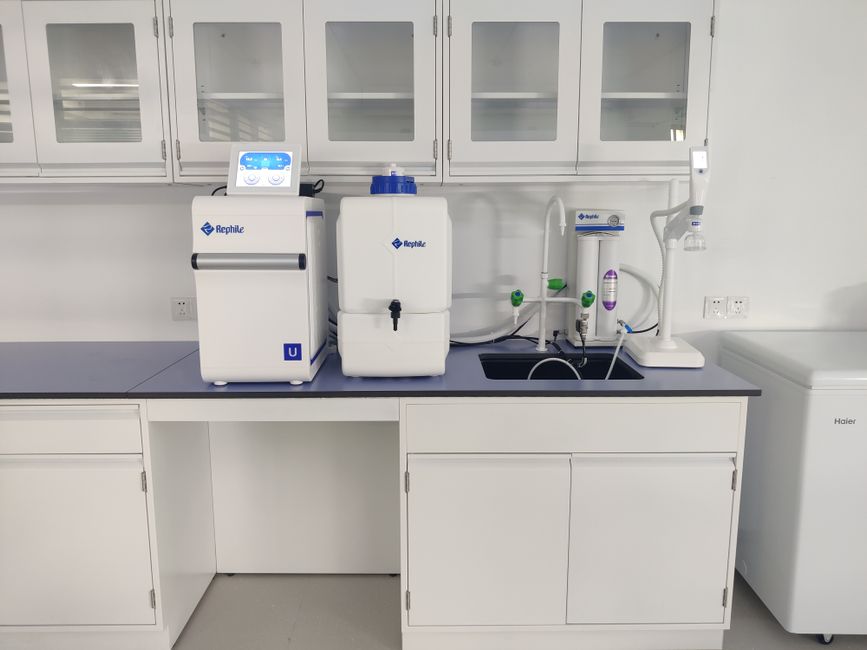
This is where your specific needs matter. You have two main options:
Point-of-Use (POU) filters target one faucet—usually your kitchen sink. They’re affordable, easy to install (no plumber required), and perfect if you only need filtered water for drinking and cooking. Most people start here.
Whole-house systems filter water at the main line, so every tap gets treated water. These cost more upfront but protect your entire home, including showers and appliances. They’re worth it if you have hard water, high sediment, or contaminants that affect bathing water too.
Not sure which one you need? If your water test shows contaminants only in your drinking water and taste is your main concern, go POU. If you have hard water, rust staining, or bacterial concerns, whole-house makes sense.
Step 5: Match Filter Type to Your Specific Contaminants
Different filter technologies handle different problems:
- Activated carbon filters remove chlorine, volatile organic compounds, and improve taste. Budget-friendly and common.
- Reverse osmosis systems remove nearly everything—minerals, salts, heavy metals, bacteria. Most thorough but slower and wastes some water.
- Ion exchange (water softeners) replace calcium and magnesium with sodium to reduce hardness. Essential in hard water areas.
- Sediment filters trap particles like rust and sand. Often used as a pre-filter before other systems.
- UV and ceramic filters kill bacteria and parasites. Good for well water with biological contamination.
Your water test will show which technology (or combination) you actually need. Don’t buy extra filtration you don’t need—it’s wasteful and drives up costs.
Step 6: Factor in Long-Term Maintenance and Cost
A cheap filter that needs replacing every two months isn’t actually cheap.
Calculate the total cost of ownership: initial purchase price plus replacement cartridge costs, frequency, and how often you’ll change them. Some filters cost $40 upfront but $100 per year in replacements. Others cost $300 upfront but last three years.
Also consider: can you replace cartridges yourself, or do you need a technician? Some systems are DIY-friendly; others aren’t. Ask before you buy.
When you’re comparing systems, check WaterPurityGuide’s product reviews and cost breakdowns to see what real customers spend over time, not just the sticker price.
Step 7: Check Water Flow Rate and Capacity
How much filtered water do you actually need each day? If you’re filtering for a family of four, you need a system that keeps up with demand.
Flow rate is measured in gallons per minute (GPM). Under-sink filters typically flow at 0.5-2 GPM. If that’s too slow for your lifestyle, you might want a larger capacity system or whole-house option.
Capacity tells you how many gallons a cartridge can filter before it needs replacement. Higher capacity means fewer cartridge changes—great for heavy users.
Step 8: Read Certifications and Reviews Carefully
Just because a filter is sold doesn’t mean it actually works. Look for third-party certifications (NSF, WQA, or similar) and read verified customer reviews on sites like WaterPurityGuide, where homeowners share their real results.
Watch out for marketing fluff like “removes 99% of contaminants”—that’s meaningless without specifics. Real filters list exactly what they remove.
Also check if the filter comes with a warranty. Reputable brands back their products for a reason.
Quick Recap: Your Water Filtration System Checklist
Before you buy, make sure you’ve done this:
- Test your water (free report or DIY kit)
- Identify the contaminants present
- Find filters with NSF certification for those contaminants
- Match filter type to your problems
- Decide between point-of-use or whole-house
- Calculate total cost of ownership (not just upfront price)
- Verify flow rate meets your household needs
- Read independent reviews and certifications
Where to Start if You’re Overwhelmed
If all of this feels like too much, start simple: get a water test, then head to WaterPurityGuide’s product finder tool and filter by your test results. The system will match you with certified filters that actually target your specific contaminants.
Related: How UV Water Purification Works: A Simple Guide
You don’t need to be a water chemistry expert to pick the right filter. You just need your test results and a system that’s honest about what it can and can’t do.
People Also Ask
What is the most reliable water filtration system?
There’s no single “best” system because it depends on your water quality. That said, reverse osmosis systems remove the most contaminants and are highly effective for homes with multiple water quality issues. Activated carbon filters are the most reliable for chlorine and taste problems on a budget. NSF 53 certified filters are your safest bet for health-related contaminants like lead.
How often should you replace water filter cartridges?
It depends on the filter type and your water quality. Basic sediment filters might need replacement every 3-6 months. Activated carbon filters last 6-12 months. Reverse osmosis pre-filters change annually. Check your specific filter’s manual—manufacturers provide guidance based on gallons filtered, not just time elapsed. If your water is really dirty, cartridges wear out faster.
Related: Best Reverse Osmosis Water Filters 2026: Top 6 Ranked
Related: Reverse Osmosis Water Purification System: Complete Buyer’s Guide
Related: How to Test Well Water Quality: Complete Guide
Related: Best RV Water Filters for Camping Trips 2026: Top 5 Ranked
Related: Best Water Softener Replacement Parts 2026: Top 5 Ranked
Related: Best Water Purification Systems 2026: Top 6 Ranked
Related: Best Portable Water Filtration Systems for Backpacking 2026: Top 5 Ranked
Related: Best Water Filtration System 2026: Top 5 Ranked & Compared
Related: Best Water Filters 2026: Top 5 Ranked & Compared
Related: Best Water Softeners 2026: Top 5 Ranked & Compared
Related: Best Water Filters for Home 2026: Top 6 Ranked
Related: Best Countertop Water Filter Pitchers 2026: Top 6 Ranked
Can you use multiple filters together?
Absolutely. Many systems use multi-stage filtration—a sediment pre-filter, then carbon, then reverse osmosis, for example. This combo approach catches different contaminant types. Just make sure each stage is certified for what you’re targeting. More stages mean slower flow and higher maintenance, but better results.
Is bottled water better than a home filtration system?
Not really. Home filtration is cheaper over time, better for the environment (less plastic waste), and subject to EPA testing standards just like municipal water supplies. A quality home filter typically costs $2-5 per gallon of clean water, while bottled water runs $5-10+ per gallon. Plus you control the filtration process yourself.